Yearly Archives: 2017

From Pork to Pancakes: A Few of Europe’s Famous Fat Tuesday Foods

Fat Tuesday, Mardis Gras, Fastnacht, Carnevale. Whatever you call it, Europe marks the day before the start of Lent with celebration and feasting. In the past, Catholics abstained from eating certain foods during the six weeks before Easter—meat, eggs, milk, and butter, to name a few. During the Middle Ages, these foods were not just prohibited at Lent; they were banned. Since food preservation wasn’t what it is today, people had two choices. Eat the food or let it rot. As a result, many cultures developed recipes to combine several ingredients into one sweet or savory dish. Here are a few famous European Fat Tuesday eats sorted by nation of origin.

Germany

At first glance, it may seem odd that Germany’s most famous Fat Tuesday food is a pastry. Shouldn’t it be a meat dish? A sausage of some sort? Nope, it’s a doughnut-like confection. The fastnacht served an important purpose at Lent in the past when uneaten animal products and by-products would rot. The fastnacht recipe makes fantastic use of three prohibited Lenten foods—eggs, milk, and lard. In that way, the fastnacht hits three birds with one doughnut.

While I can’t find any information on the fastnacht’s origins, we do know the treat is named after the holiday itself, which translates to night before the feast. It is popular to this day, especially in Pennsylvania. Many Pennsylvania Dutch bakers serve the pastry still and some restaurateurs have put their own spin on it. In 2014, a brewing company in Hershey developed a fastnacht ice cream sandwich and some restaurants offer a burger on fastnacht buns. (Watch out, Paula Dean.)

fastnachts doughnuts fastnacht

This woman frosts fastnachts for Fat Tuesday. (Photo Credit: Ted Van Pelt)

Spain

The Spanish name for Fat Tuesday is Jueves Lardero, which translates to Lard Tuesday. With a name like that, does it come to any surprise that pork is the star of many Spanish Fat Tuesday dishes? A Belgian in-flight magazine encourages tourists visiting Spain to try “relleno de carnaval, a dish of pork intestines stuffed with cured ham, garlic and saffron cooked over a slow flame, and chicharrón, a deliciously textured dish made with crispy fried pork rind.” In other words, don’t forget to try some pig with a side of pig sprinkled with a little pig dust.

Different parts of Spain enjoy different foods and many of them contain pork. In Soria, the youth eat pigs cheek in a dish called merienda. In central Spain, chorizo sausage and eggs are baked into a bread called el hornazo. The rhyming dish Jueves Lardero chorizo y huevo—which also contains chorizo and egg—is popular in the Castilla-Leon region. But the Spanish—like so many other European cultures—have a sweet dish, too. The pina is a popular pastry in Soria made with flour and honey.

Jueves Lardero chorizo y huevo

Jueves Lardero chorizo y huevo contains chorizo and whole eggs. (Photo Credit: Wikipedia)

Great Britain and Ireland

The British refer to Mardi Gras as Pancake Day for a very obvious reason. In order to use up any excess butter, milk, and eggs, the British made pancakes. The tradition goes as far back as the fifteenth century when pancakes were much larger and flipping them required a bit of skill.

Perhaps more interesting than the pancake itself, is the folklore and traditions surrounding it. If the eldest eligible daughter in an Irish family successfully flipped the first pancake, it was believed that she would be married within the year. According to Irish Central, ‘Lent Crocking’ was a popular custom in which “children would pass from house to house asking for pancakes. If they weren’t given any, broken crockery would be thrown at the door!” It appears that another pastry, the hot cross bun, has British roots, as well. In the past, people considered the first three pancakes holy. They set those pancakes aside, sprinkled them with salt, and marked them with crosses. Over time, the pancake was swapped out for buns.

hot cross buns

Hot cross buns may have originally been hot cross pancakes. (Photo Credit: Wikimedia)

Italy

Italy’s Fat Tuesday celebrations are called Carnevale. Like Germany’s Fastnacht and England’s Pancake Day, baked goods dominate the Carnevale celebration. The castagnole—an Italian-style fritter—utilizes milk, eggs, and butter. Though Italians fry it in oil today, they may have cooked it in leftover lard in the past. The frittelle is a softer version of a castagnole sometimes filled with cream. The sanguinaccio—a sweet custard made of pig’s blood and flavored with dark chocolate—is by far the strangest dessert on the Carnevale menu.(This blood pudding was beautifully featured on an episode of NBC’s Hannibal.)

I think I’ll forgo pig’s blood and go straight for the pasta. Lasagna is also a Carnevale dish. It requires three ingredients banned during Lent: cheese, meat, and the eggs used in making the pasta sheets.
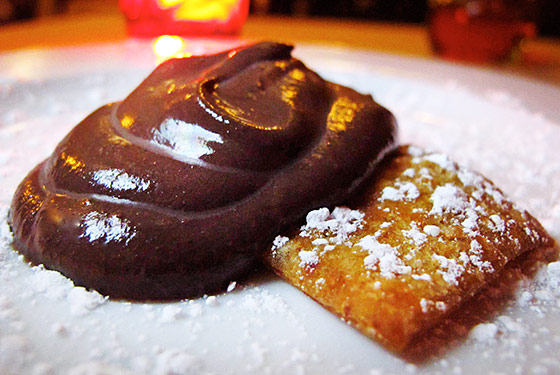
Sanguinaccio

Sanguinaccio is a Carnavale dessert made with pig’s blood and chocolate. (Photo Credit: Wikimedia)

meAndrea Cefalo is a medieval fiction author and history blogger. Her debut novel The Fairytale Keeper was a quarter-finalist in Amazon’s 2013 Breakthrough Novel Contest. The sequel–The Countess’s Captive—was published earlier this year.  She is currently working on the third book in her series.

If you enjoyed this post, there’s more where that came from! Check out the archives or peruse the sidebar for a list of trending posts.  To make sure you don’t miss out on my latest articles, follow this blog or sign up for the newsletter.

And if you happen to be a historical fiction reader who loves a strong female voice and gritty Medieval settings, check out The Fairytale Keeper series. Publisher’s Weekly calls The Fairytale Keeper a “resonant tale set late in the 13th century…with unexpected plot twists. An engaging story of revenge.”
 

Abelard & Heloise: 5 Lesser-Known Facts about these Medieval Lovers

When most people hear the name Peter Abelard, they think of Heloise and their affair. Some liken this romance between teacher and student to Romeo and Juliet. What began with forbidden love ended in tragedy and separation, but that is where the similarities end.  So, for a special Valentine’s Day post, I’ve found five more interesting tidbits about the Middle Age’s most famous star-crossed lovers.

Abelard Was Looking for a Mistress Before He Met Heloise

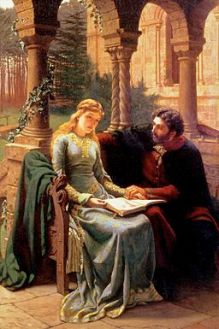
abelard and his pupil heloise by edmund blair leighton

Leighton’s Abelard and His Pupil Heloise. (1882)

Abelard didn’t step blindly into a teacher position and then fall for his pupil, Heloise.  In fact, according to Pierre Bayle’s The Letters of Abelard and Heloise, Abelard admits in a letter that he had already been searching for a mistress to help him pass “agreeably those hours he did not employ in his study” and while several women had caught his attention, he was not looking for “easy pleasure.”

In a letter written years later to a man named Philintus, Abelard says, “I was ambitious in my choice, and wished to find some obstacles, that I might surmount them with the greater glory and pleasure.” This suggests some forethought on the part of Abelard when it came to an affair.

Abelard Planned to Seduce Heloise Before She was His Student

It appears that Abelard had interacted with or at least known of Heloise before he was her teacher. In the same letter written to Philintus, Abelard says a young woman in Paris caught his eye. She was indeed Heloise.

In that same letter, Abelard writes that “by the offices of common friends I gained the acquaintance of Fulbert [Heloise’s uncle and caretaker]; and can you believe it…he allowed me the privilege of his table, and an apartment in his house?” Later, Fulbert asked Abelard if he would tutor Heloise. Imagine the cannon’s excitement when one of France’s most respected scholars agreed to tutor his niece. It was during their lessons that Abelard convinced a reluctant Heloise to become his lover.

Heloise and Abelard May Have Been Kinky

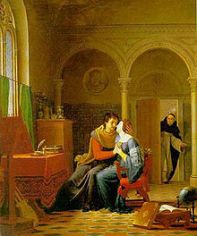
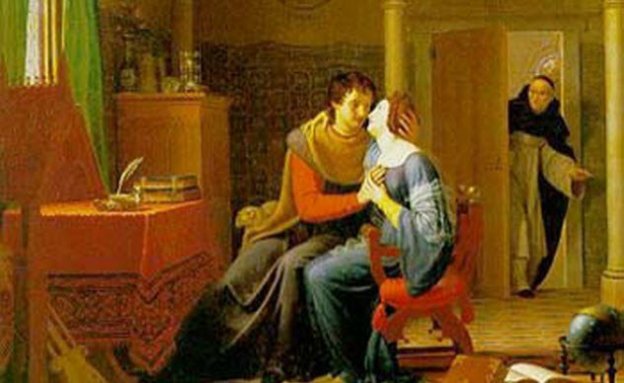
abelard and heloise surprised by master fulbert jean vignaud 1819

Vignaud’s Abelard and Heloise Surprised by Master Fulbert. (1819)

Okay. This isn’t exactly a fact and it may be a stretch. Bear with me. Heloise and Abelard had sex in places that put them at high risk for getting caught. Did they do this to spice up their lovemaking? It’s possible.

Besides this, the pair may have had domination and submission fetishes. In his biography of Heloise and Abelard, James Burge claims Heloise felt wild freedom in completely surrendering to Abelard. Priya Jain, in an article for Salon magazine, suggests her submission to Abelard may have extended into their sex life. Abelard mentions physically punishing Heloise during her lessons. He also says Heloise was reluctant to have sex in a church refectory but did so after some convincing. We can only speculate whether this translates to fetish, but it seems plausible.

Some might argue that medieval women were generally submissive to men, especially their husbands and fathers. But Heloise was not your average medieval woman.

A Public Marriage Might Have Been Career-Suicide for Abelard

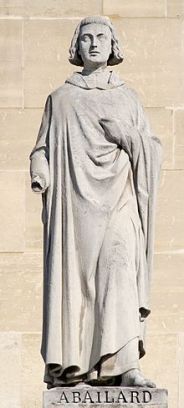
Statue of Abelard by Jules Cavelier 1853 Louvre

Cavelier’s Abelard. (1853)

In previous years, it was considered acceptable for lower clergy—such as a scholar attached to a Church—to have a wife or lover. But by the twelfth century, these scholars were held to the same vows of chastity as monks and priests.

This didn’t deter Abelard from his affair or even make him particularly cautious. As mentioned above, the pair had sex in places where they could have easily been caught— Fulbert’s bed chambers, a church refectory, and a convent kitchen, to name a few. Strangely, the affair did not cost Abelard his career, even though Fulbert was a well-connected canon in Paris. Sadly, it was Heloise who suffered the greatest consequence at first.

When Heloise got pregnant, she left Paris to live with Abelard’s sister in Brittany. There she gave birth to a son. Eventually, Heloise agreed to a secret marriage. This meant Heloise’s reputation remained tarnished and she had to live in a convent. Meanwhile, Abelard lived life as usual. Some historians suggest Abelard began losing interest in Heloise, which must have been devastating to the woman who gave up so much for him. Around this time, Fulbert hired a man to castrate the scholar. This not only put a quick end to the affair, it prevented any future affairs Abelard might have had. It also left him humiliated.

Heloise Was Incredibly Unconventional

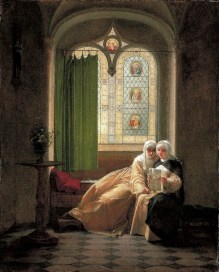
Jean-Baptiste Mallet Heloise at the Abbey of Paracelt

Mallet’s Heloise at the Abbey of Paraclete.(early 19th cent.)

For the most part, women—even those of higher status—were not as well-educated as their male counterparts. Abelard mentions that most women hated learning anything beyond needlework. Yet, Fulbert recognized his niece’s intellect and chose to nurture it. After all, Fulbert convinced one of France’s greatest scholars, Abelard, to instruct Heloise in philosophy. Even Abelard was impressed with her wit and how quickly she learned. Besides this, her well-written letters, rise to prioress, and unconventional yet logical arguments all speak to her intelligence and knowledge.

Heloise’s ideas about relationships were as counterculture as her education. Though it wasn’t exactly rare to have a child out of wedlock during the Middle Ages, it certainly wasn’t ideal. Most women would have married their lover for the sake of their reputation and that of their child. When Heloise’s pregnancy was made known, Fulbert insisted on a marriage and Abelard offered. Yet Heloise—at least initially—turned down the idea. She even recruited Abelard’s sister Lucilla to help convince him that

abelard_and_heloise-1

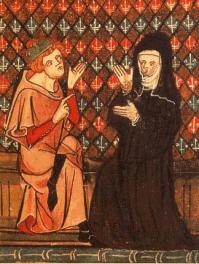
Abelard and Heloise. Manuscript Roman de la Rose. (14th cent.)

the marriage was a bad idea. In a letter to Abelard, Heloise says, “The name of mistress instead of wife would be dearer and more honorable for me…” In another letter, she says, “Even if I could be Queen to the Emperor and have all the power and riches in the world, I’d rather be your whore.”

Not only was her refusal unconventional, it was considered gravely sinful at the time and a risk to her soul’s salvation if she did not repent. Whether she decided to repent at some time in her life, I do not know. We do know that Heloise did submit to a secret marriage not long after the birth of their son, Astrolabe.

That brings up another unusual move on Heloise’s part. She named her son after an astronomical device invented by Muslim astronomers. During the Middle Ages, parents gave their children Christian names. For certain a bastard named Abelard would have drawn a few strange looks. Sadly, not much is known about their son.

Heloise’s lifelong devotion, while not exactly counterculture, is rather strange. One would think that after years apart, Heloise might have developed feelings of resentment towards Abelard. After all, Heloise had no desire to take holy orders, but she did at Abelard’s insistence. Yet, years later the two began a correspondence again that shows her undying affection for him and when Abelard died in 1142 at the age of 63, his remains were taken to Heloise who outlived him by 20 years. She asked to be placed in the same tomb as Abelard, but it is more likely that the two were entombed near each other. Later their remains were moved. Abelard and Heloise now rest side-by-side in Pere Lachaise Cemetery in Paris.

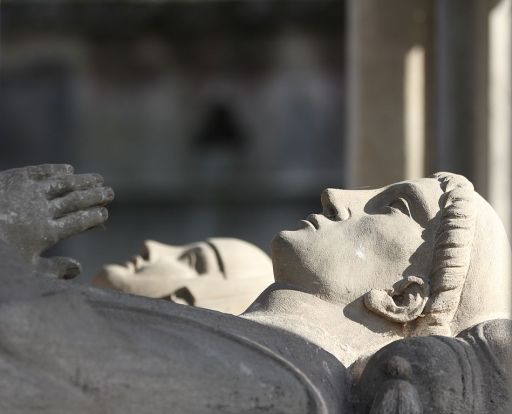
Lenoir's Tomb of Abelard and Heloise. (1817) Pere Lachaise Cemetery.

Lenoir’s Tomb of Abelard and Heloise. (1817) Pere Lachaise Cemetery.

profile pic
Andrea Cefalo is a Medieval fiction author and Medieval history blogger. Her debut novel, The Fairytale Keeper,  was a quarter-finalist in Amazon’s 2013 Breakthrough Novel Contest. The sequel, The Countess’ Captive, was released in 2015.  To keep up with her blog posts, upcoming novels, and musings, follow her on Facebook and Twitter or sign up for the VIP monthly newsletter.


Works Cited

Abelard, Peter, and Heloise. The Letters of Abelard and Heloise. Trans. Betty Radice. Harmondsworth: Penguin, 1974. Print.

Bayle, Pierre. “Letters of Abelard and Heloise.” Project Gutenburg. N.p., 27 Apr. 2011. Web. 9 Feb. 2017.

Cavlier, Jules. Abelard. 1853. Stone Scultpure. Louvre Museum in Paris.

The Editors of Encyclopædia Britannica. “Heloise.” Encyclopædia Britannica. Encyclopædia Britannica, Inc., 20 July 1998. Web. 10 Feb. 2017.

Jain, Priya. “Lust, Revenge and the Religious Right in 12th Century Paris.” Salon. N.p., 18 Dec. 2004. Web. 8 Feb. 2017.

Leighton, Edmund Blair. Abelard and his Pupil Heloise. 1882. Oil on Canvas.

Lenoir, Alexandre. Tomb of Abélard and Héloïse. 1817. Tomb. Pere Lachaise Cemetery.

Luscombe, David Edward. “Peter Abelard.” Encyclopædia Britannica. Encyclopædia Britannica, Inc., 25 Mar. 1999. Web. 10 Feb. 2017.

Mallet, Jean-Baptiste Mallet. Eloise at the Abbey of Paraclet. Oil on canvas
Grasse, Musée Fragonard.

Nehring, Cristina. “Heloise & Abelard: Love Hurts.” Sunday Book Review. The New York Times, 13 Feb. 2005. Web. 7 Feb. 2017.

Vignaud, Jean. Abelard and Heloise Surprised by Master Fulbert. 1819. Oil on Canvas.