
Fat Tuesday, Mardis Gras, Fastnacht, Carnevale. Whatever you call it, Europe marks the day before the start of Lent with celebration and feasting. In the past, Catholics abstained from eating certain foods during the six weeks before Easter—meat, eggs, milk, and butter, to name a few. During the Middle Ages, these foods were not just prohibited at Lent; they were banned. Since food preservation wasn’t what it is today, people had two choices. Eat the food or let it rot. As a result, many cultures developed recipes to combine several ingredients into one sweet or savory dish. Here are a few famous European Fat Tuesday eats sorted by nation of origin.
Germany
At first glance, it may seem odd that Germany’s most famous Fat Tuesday food is a pastry. Shouldn’t it be a meat dish? A sausage of some sort? Nope, it’s a doughnut-like confection. The fastnacht served an important purpose at Lent in the past when uneaten animal products and by-products would rot. The fastnacht recipe makes fantastic use of three prohibited Lenten foods—eggs, milk, and lard. In that way, the fastnacht hits three birds with one doughnut.
While I can’t find any information on the fastnacht’s origins, we do know the treat is named after the holiday itself, which translates to night before the feast. It is popular to this day, especially in Pennsylvania. Many Pennsylvania Dutch bakers serve the pastry still and some restaurateurs have put their own spin on it. In 2014, a brewing company in Hershey developed a fastnacht ice cream sandwich and some restaurants offer a burger on fastnacht buns. (Watch out, Paula Dean.)

This woman frosts fastnachts for Fat Tuesday. (Photo Credit: Ted Van Pelt)
Spain
The Spanish name for Fat Tuesday is Jueves Lardero, which translates to Lard Tuesday. With a name like that, does it come to any surprise that pork is the star of many Spanish Fat Tuesday dishes? A Belgian in-flight magazine encourages tourists visiting Spain to try “relleno de carnaval, a dish of pork intestines stuffed with cured ham, garlic and saffron cooked over a slow flame, and chicharrón, a deliciously textured dish made with crispy fried pork rind.” In other words, don’t forget to try some pig with a side of pig sprinkled with a little pig dust.
Different parts of Spain enjoy different foods and many of them contain pork. In Soria, the youth eat pigs cheek in a dish called merienda. In central Spain, chorizo sausage and eggs are baked into a bread called el hornazo. The rhyming dish Jueves Lardero chorizo y huevo—which also contains chorizo and egg—is popular in the Castilla-Leon region. But the Spanish—like so many other European cultures—have a sweet dish, too. The pina is a popular pastry in Soria made with flour and honey.

Jueves Lardero chorizo y huevo contains chorizo and whole eggs. (Photo Credit: Wikipedia)
Great Britain and Ireland
The British refer to Mardi Gras as Pancake Day for a very obvious reason. In order to use up any excess butter, milk, and eggs, the British made pancakes. The tradition goes as far back as the fifteenth century when pancakes were much larger and flipping them required a bit of skill.
Perhaps more interesting than the pancake itself, is the folklore and traditions surrounding it. If the eldest eligible daughter in an Irish family successfully flipped the first pancake, it was believed that she would be married within the year. According to Irish Central, ‘Lent Crocking’ was a popular custom in which “children would pass from house to house asking for pancakes. If they weren’t given any, broken crockery would be thrown at the door!” It appears that another pastry, the hot cross bun, has British roots, as well. In the past, people considered the first three pancakes holy. They set those pancakes aside, sprinkled them with salt, and marked them with crosses. Over time, the pancake was swapped out for buns.

Hot cross buns may have originally been hot cross pancakes. (Photo Credit: Wikimedia)
Italy
Italy’s Fat Tuesday celebrations are called Carnevale. Like Germany’s Fastnacht and England’s Pancake Day, baked goods dominate the Carnevale celebration. The castagnole—an Italian-style fritter—utilizes milk, eggs, and butter. Though Italians fry it in oil today, they may have cooked it in leftover lard in the past. The frittelle is a softer version of a castagnole sometimes filled with cream. The sanguinaccio—a sweet custard made of pig’s blood and flavored with dark chocolate—is by far the strangest dessert on the Carnevale menu.(This blood pudding was beautifully featured on an episode of NBC’s Hannibal.)
I think I’ll forgo pig’s blood and go straight for the pasta. Lasagna is also a Carnevale dish. It requires three ingredients banned during Lent: cheese, meat, and the eggs used in making the pasta sheets.
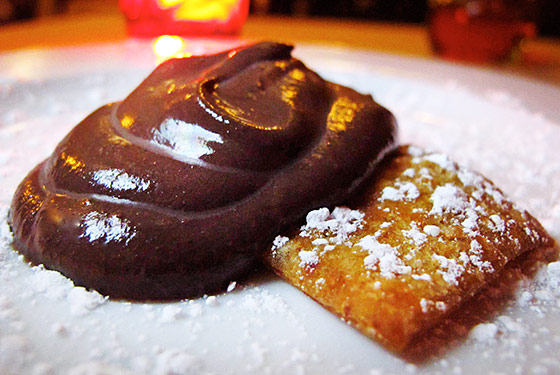
Sanguinaccio is a Carnavale dessert made with pig’s blood and chocolate. (Photo Credit: Wikimedia)
 Andrea Cefalo is a medieval fiction author and history blogger. Her debut novel The Fairytale Keeper was a quarter-finalist in Amazon’s 2013 Breakthrough Novel Contest. The sequel–The Countess’s Captive—was published earlier this year. She is currently working on the third book in her series.
If you enjoyed this post, there’s more where that came from! Check out the archives or peruse the sidebar for a list of trending posts. To make sure you don’t miss out on my latest articles, follow this blog or sign up for the newsletter.
And if you happen to be a historical fiction reader who loves a strong female voice and gritty Medieval settings, check out The Fairytale Keeper series. Publisher’s Weekly calls The Fairytale Keeper a “resonant tale set late in the 13th century…with unexpected plot twists. An engaging story of revenge.”
 Andrea Cefalo is a Medieval fiction



 Andrea Cefalo is a Medieval fiction


 Andrea Cefalo is a Medieval fiction


 Annie Whitehead
 Andrea Cefalo is a Medieval fiction

 Andrea Cefalo is a Medieval fiction


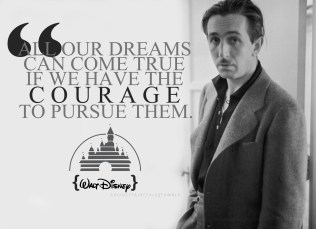 Without Walt Disney, I wouldn’t be a writer today. Not only has he inspired me to dream big, he is the reason I—and many others—love fairytales. Without him, I might never have learned to love the stories of Snow White and Cinderella. Without him, I might never have opened the pages to Grimm’s Fairytales and discovered The Three Army Surgeons and The Girl With No Hands. Without him, I would have never wondered where these stories came from and I would have never written The Fairytale Keeper series. I don’t know that most people can say Walt Disney changed the course of their lives like I can, but surely he brought some sense of whimsy and joy to all our lives. In my opinion, that is his biggest contribution—making millions of people happy and proving they too could follow their dreams.


 THE WRITER-LY WORLD OF ANDREA CEFALO